
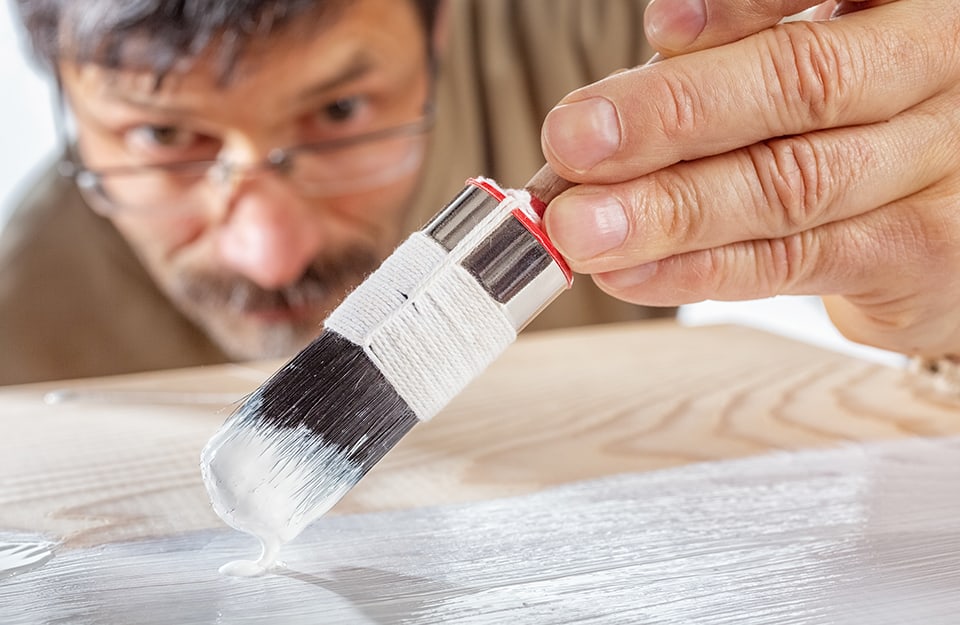
The application of a primer is a treatment that in many cases is underestimated when it comes to preparing a wooden element for subsequent finishing.
In reality, it is a very important phase as it helps to better protect the wood, improve the adhesion of the paint, and reduce moisture absorption. Let’s take a closer look at the wood primer: what it is, how and when to use it.
What is wood primer? Composition and definition
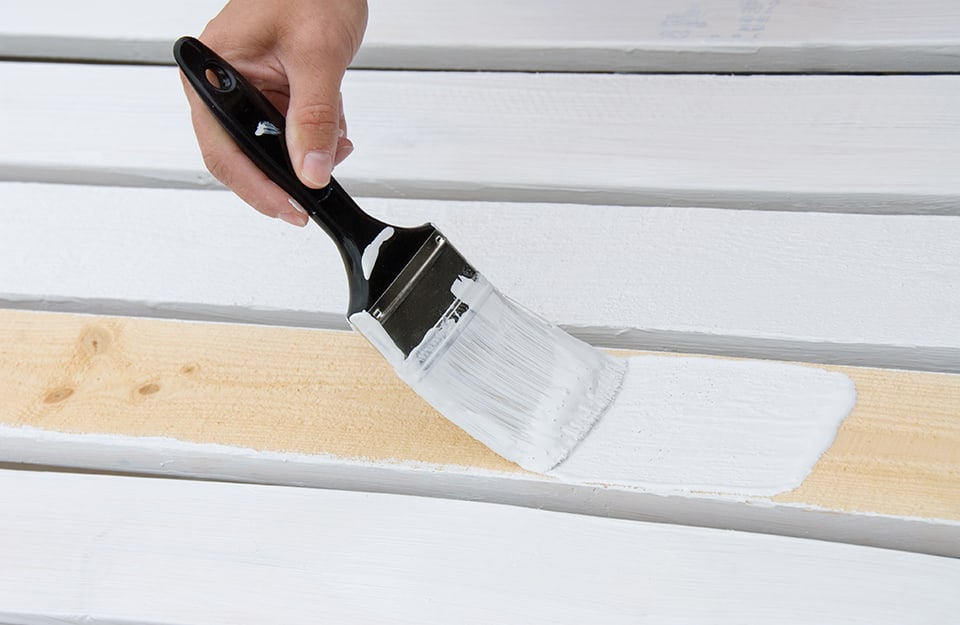
As already mentioned, primer is a treatment designed to improve the adhesion of the paint that will later be applied. The product penetrates the fibers and pores, reducing moisture absorption and providing greater protection, even against fungi and mold.
It can be applied to all types of wood, including exotic species and reclaimed timber. It is also used on new woodwork and acts as a “base coat” before painting.
For woods rich in tannins, there are specific primers that prevent their release.
The primer can be transparent or opaque. In the first case, it can replace pore fillers, which are only meant to close the pores of the wood to prevent product penetration but do not offer the same protection as a primer.
In the second case, it should definitely be preferred over cementite, which we believe has now become obsolete and whose use we discourage.

How is it used?

First of all, you’ll need a brush (with synthetic or natural bristles) or a short-nap roller.
The ideal environmental conditions for application are between 10°C and 25°C, in well-ventilated areas but without direct drafts.
Here are the steps to follow:
- Clean the surfaces to be treated, removing dust and residues;
- If the wooden item already has paint in poor condition, it must be completely removed by scraping and sanding it with 80–150 grit sandpaper;
- If the paint is not too worn, a light sanding is enough to smooth the surface;
- If the piece is new and in raw wood, a fine sanding (180–220 grit) along the grain will suffice;
- Remove all dust again;
- Take the primer and stir well before use, then apply it to the wood using a brush or roller as needed. If you’re experienced, you can also use a spray gun.
How many coats of primer should be applied?

The most important thing when applying wood primer is to do it as evenly as possible, avoiding product buildup.
Usually, one or two coats are applied, depending on the porosity of the treated surface (the more porous the wood, the more primer it will need).
Do not forget to cover even the smallest and hardest-to-reach areas, possibly using a smaller brush.
How long does it take to dry?
Generally speaking, wood primer takes at least 4 hours to dry. If you want to apply the first coat of paint, it’s best to wait the necessary time, between 4 and 16 hours, without exceeding it.
However, drying times may vary depending on atmospheric conditions.
How to choose a quality wood primer
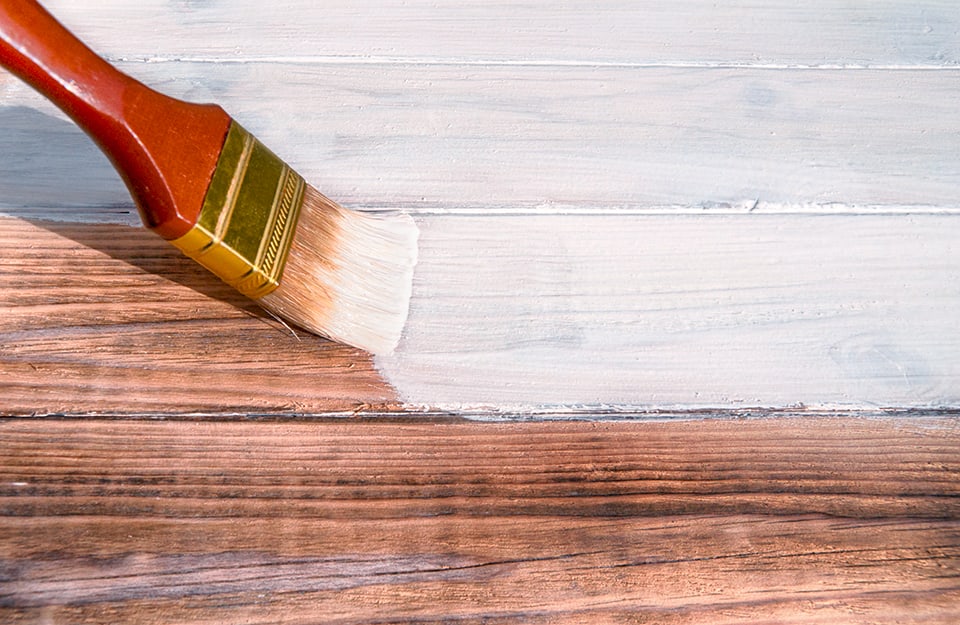
As with enamels, nowadays the market for primers is increasingly oriented towards water-based products. This is because their technical features are now very similar to solvent-based products, but with a much lower environmental impact and reduced toxicity.
Other important factors, besides price, include the presence of formaldehyde and styrene. It is advisable to choose products that do not contain them since these are carcinogenic additives.
Primers that contain UV filters are instead preferable. They are very effective in protecting wood from sun exposure, which causes color changes.
We recommend always reading the technical data sheets to assess composition and performance.
Why choose Rio Verde wood primer
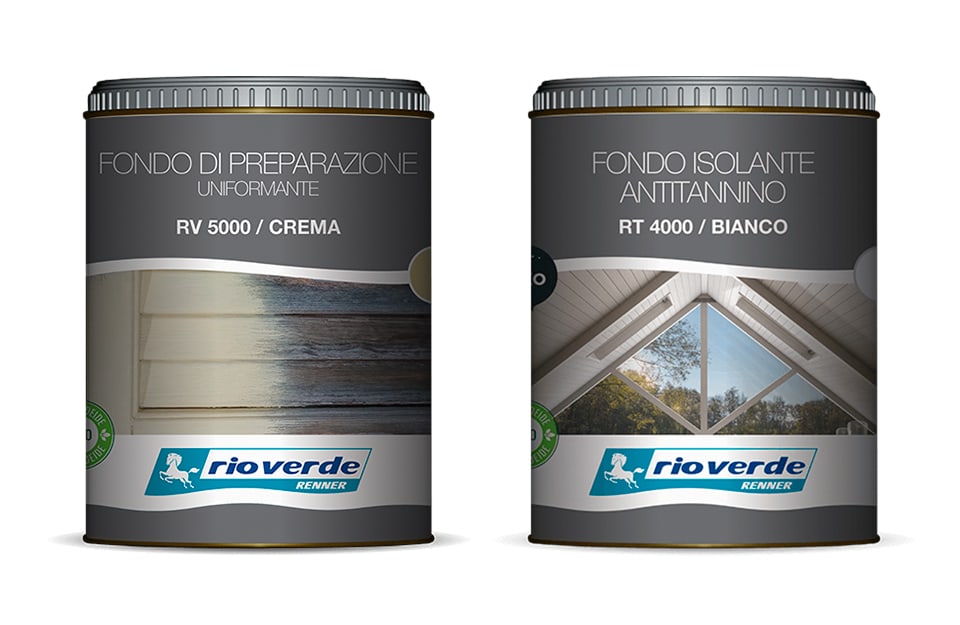
Within the Rio Verde product range by Renner Italia, there are two different primers, both water-based, formulated with special UV filters and free of formaldehyde and styrene:
- The RV 5000 uniforming preparation primer by Rio Verde can be applied to both indoor and outdoor items, such as fences, frames, and garden furniture.
It protects or restores new or partially painted, degraded, and worn wooden elements.
You can apply enamels or finishes over this primer, as its cream color is similar to new wood, making it an excellent base coat; - For tannin-rich woods, the RT 4000 insulating primer is recommended, as it prevents the release of wood extractives such as tannins and oils.
This primer creates a high-coverage insulating barrier and prevents the formation of unsightly surface stains. It also effectively covers traces of coffee, marker, crayon, and possible wood oxidation.
For any questions or further information about the products and their application, you can contact us for a free consultation with our experts.
