
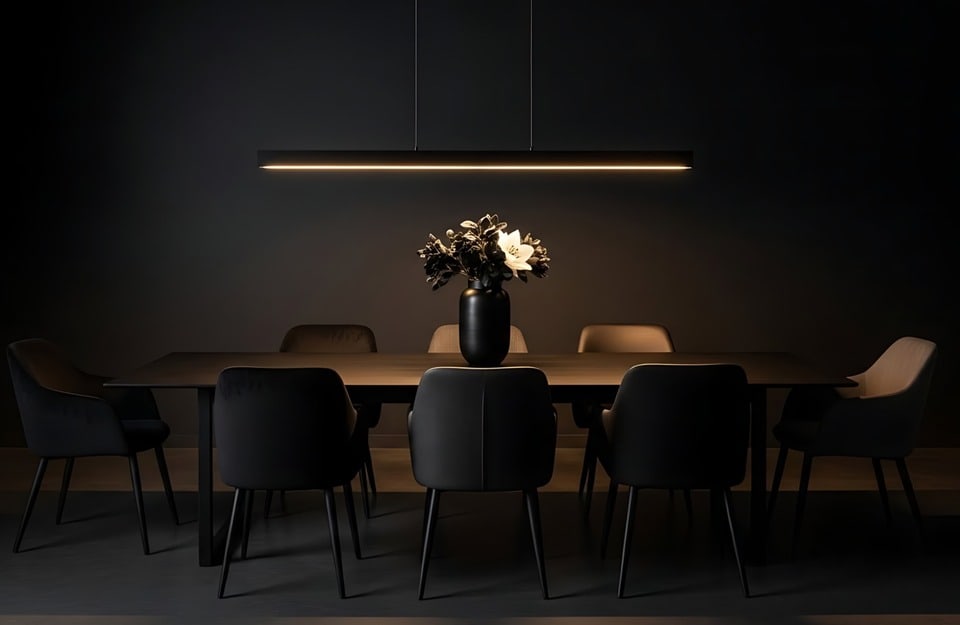
Dark wood is among the 2026 trends, between material depth and a new silent luxury
In 2026, dark wood establishes itself as one of the most relevant materials in contemporary interior design. This is not a simple aesthetic comeback, nor a nostalgic return to traditional or classic interiors. Today, dark wood is chosen for its ability to create deeper spaces, less exposed, and more perceptually stable.
After years dominated by light, reflective, hyper-luminous surfaces, there is a growing desire for environments that cannot be taken in at a single glance. Dark wood responds to this need because it holds the gaze and introduces a slower, more layered temporal dimension.
It is not a material that seeks immediate approval. It is a material that requires time, attention, and design intent.
Index
- From luminous minimalism to material density
- Key dark wood species and tones
- The relationship between dark wood and light
- Dark wood as an architectural surface
- Finishes: protecting without sealing the material
- Interior styles that enhance dark wood
- Dark wood, visual comfort and living well-being
From luminous minimalism to material density
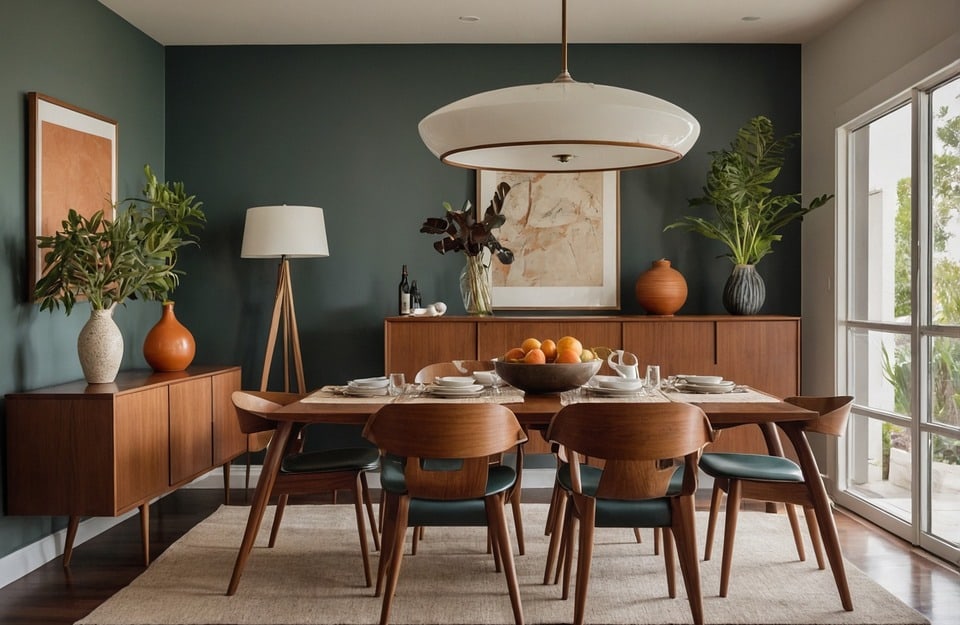
The success of dark wood is linked to a profound cultural shift. The light-toned minimalism of recent years — made up of whites, beiges, warm greys and natural oak — has created orderly, bright, controlled interiors. But it has also produced spaces that are often neutral, sometimes anonymous, and emotionally underdefined.
In the new design landscape, the need emerges for materials that restore weight, substance and presence. Dark wood conveys a visual density that does not weigh down, but structures. It reduces visual noise, defines spaces, and builds backdrops that make the environment more “legible” and, above all, more welcoming.
Ultimately, it can be seen as a quiet response to sensory overload.

Key dark wood species and tones
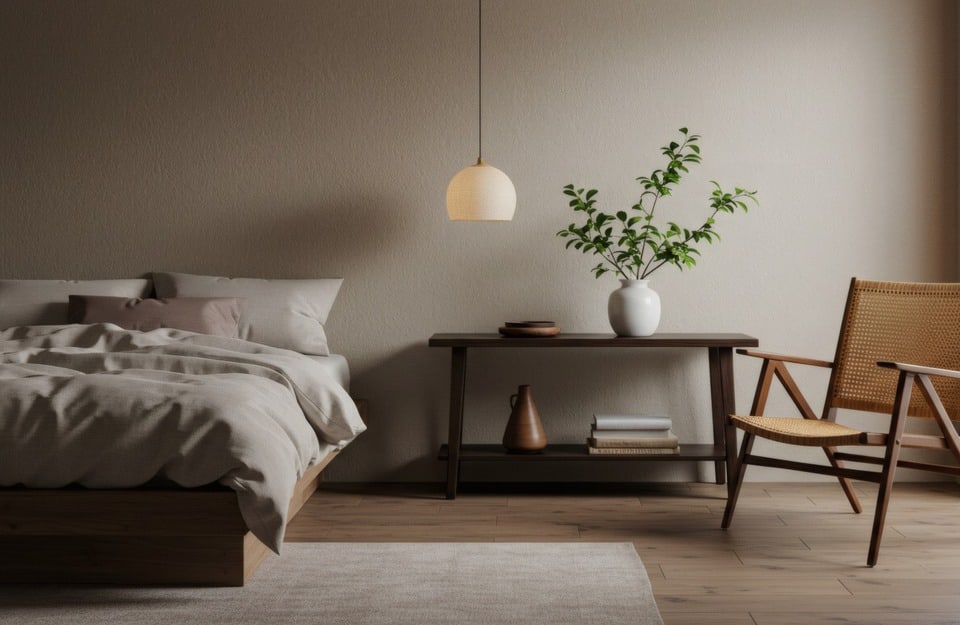
The 2026 trends favor wood species capable of combining chromatic depth with material quality. These are not uniform or artificially darkened surfaces, but woods in which the grain remains visible and alive.
Walnut continues to be one of the most appreciated species for its ability to unite warmth and refinement. It is a dark wood that does not close in, but envelops, ideal for furniture, boiserie and continuous surfaces.
Dark or smoked oak introduces a more graphic and architectural note. It is particularly suited to contemporary interiors, rigorous spaces, and projects in which wood becomes a structural element of the visual language.
Very dark species such as wengé or ebony are mainly used as accents: frames, details, vertical panels, elements that define the rhythm of a space without dominating it.
The relationship between dark wood and light
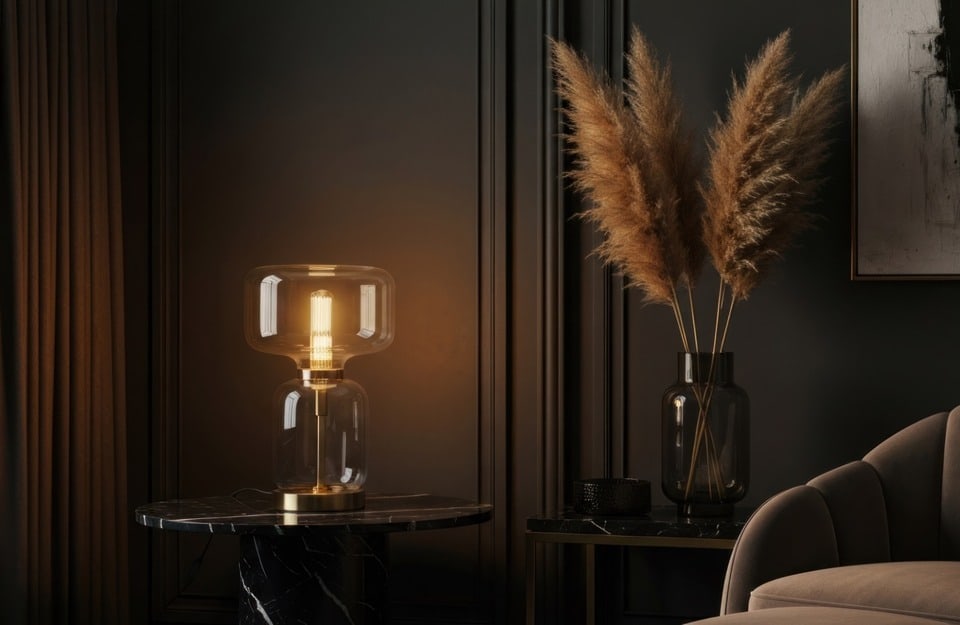
One of the most interesting aspects of dark wood is its relationship with light. Unlike light surfaces, which reflect and amplify illumination, dark wood absorbs and modulates it.
This does not make spaces darker, but more controlled. Light becomes a design tool: warmer, more localized, more narrative.
Dark wood works as a background, as a stable visual field on which light can draw different atmospheres throughout the day.
For this reason, it is particularly effective in evening living rooms, studies, bedrooms, and spaces dedicated to concentration or rest.
Dark wood as an architectural surface
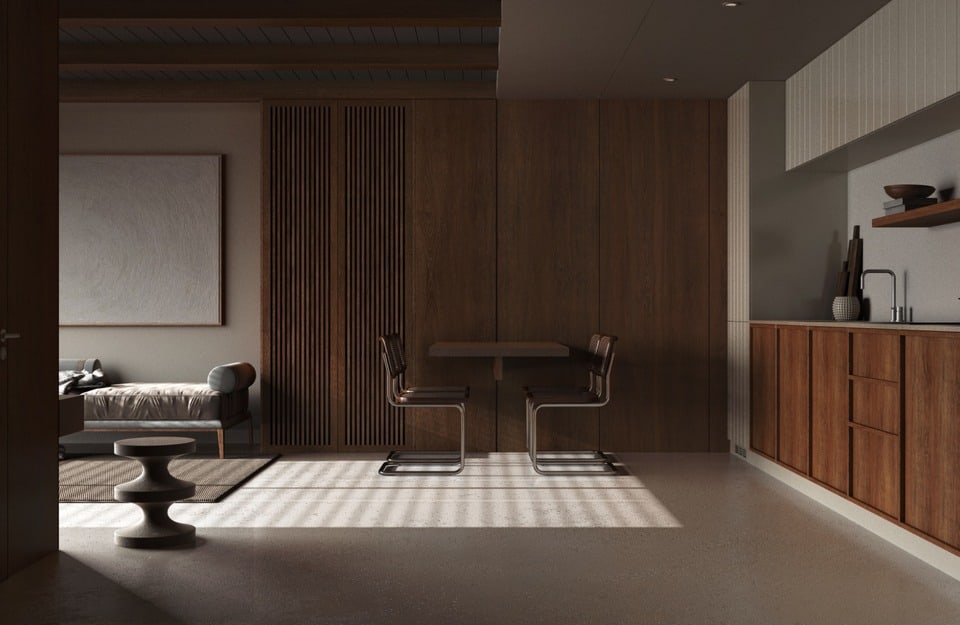
In 2026, dark wood is no longer confined to furniture. Increasingly, it becomes an architectural surface: boiserie, paneling, partitions, continuous elements that define space.
This extensive use of dark wood requires great design care, especially in the choice of finishes and products, because the surface becomes an integral part of the living experience. In these cases, wood does not decorate, but organizes space, guides the eye, and builds visual sequences.
It is an approach that brings interior design closer to architecture.
Finishes: protecting without sealing the material
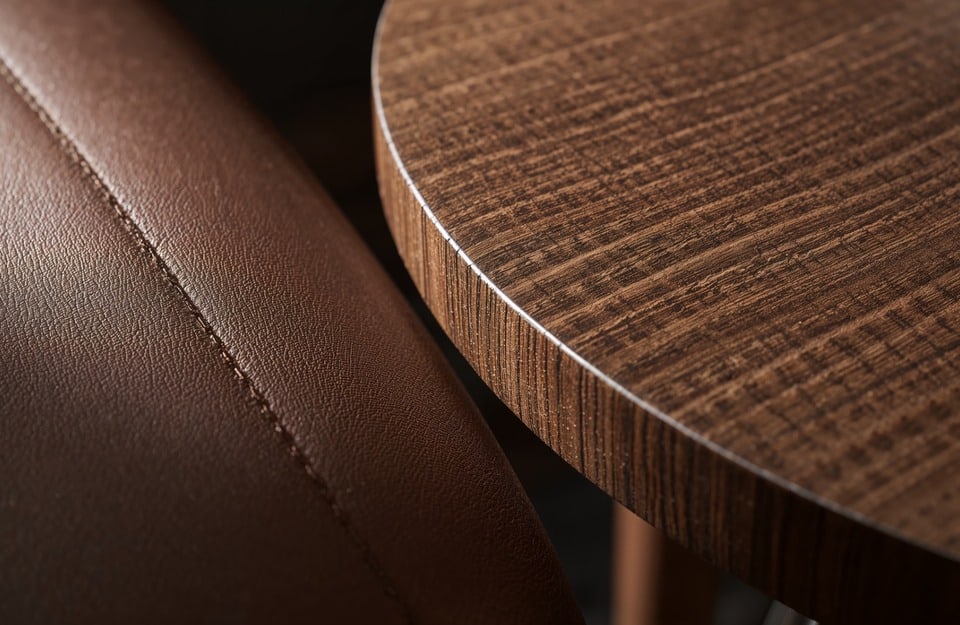
When working with dark wood, the choice of finish is decisive. An unsuitable finish can flatten the surface, close the pores, make the color artificial or excessively glossy.
In contemporary projects, matte and natural-effect finishes are preferred, capable of protecting the wood without visually overloading it. The goal is not to create a layer, but to accompany the material.
In this sense, systems such as Natural Effect Finish RO 3000 allow the chromatic depth of dark wood to be preserved, enhancing the grain while ensuring protection and living comfort.
Decorative solutions such as Vintage Prestige or Golden Prestige can also be used to achieve deep, textured surfaces or sophisticated dark accents, maintaining a balance between aesthetics and functionality.
Interior styles that enhance dark wood
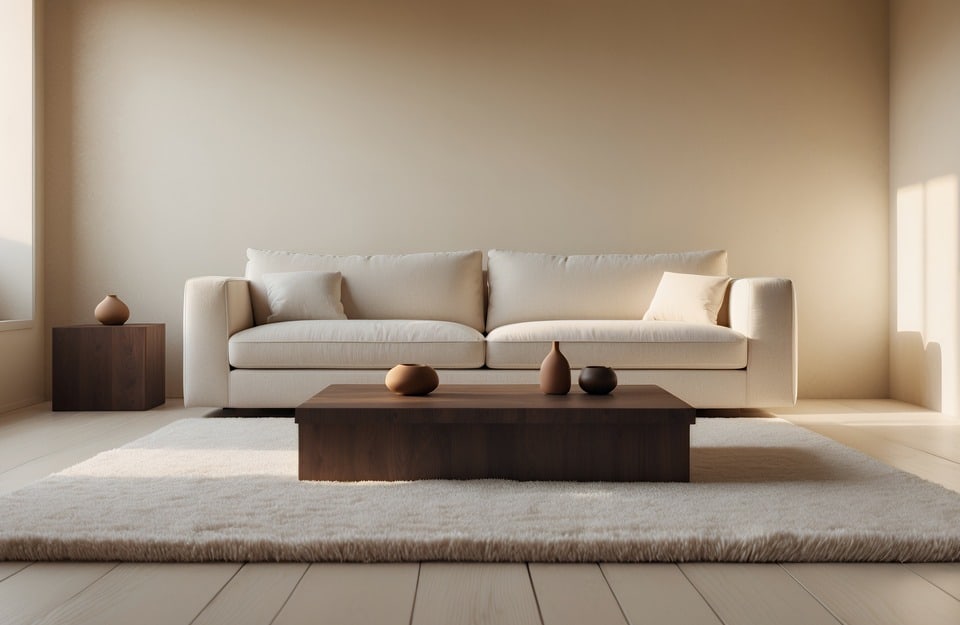
Dark wood runs through various contemporary stylistic languages.
In New Classic, it is used to reinterpret traditional elements in a contemporary way, with clean surfaces and measured proportions.
In evolved Japandi, it introduces depth and warmth, balancing formal rigor with greater material intensity. In interiors inspired by Dark Academia, it becomes a narrative element, linked to libraries, studies, and intimate, cultured spaces.
In contemporary luxury, finally, dark wood is one of the key materials of so-called silent luxury: a luxury made of quality, durability, matte finishes, and the absence of ostentation.
Dark wood, visual comfort and living well-being
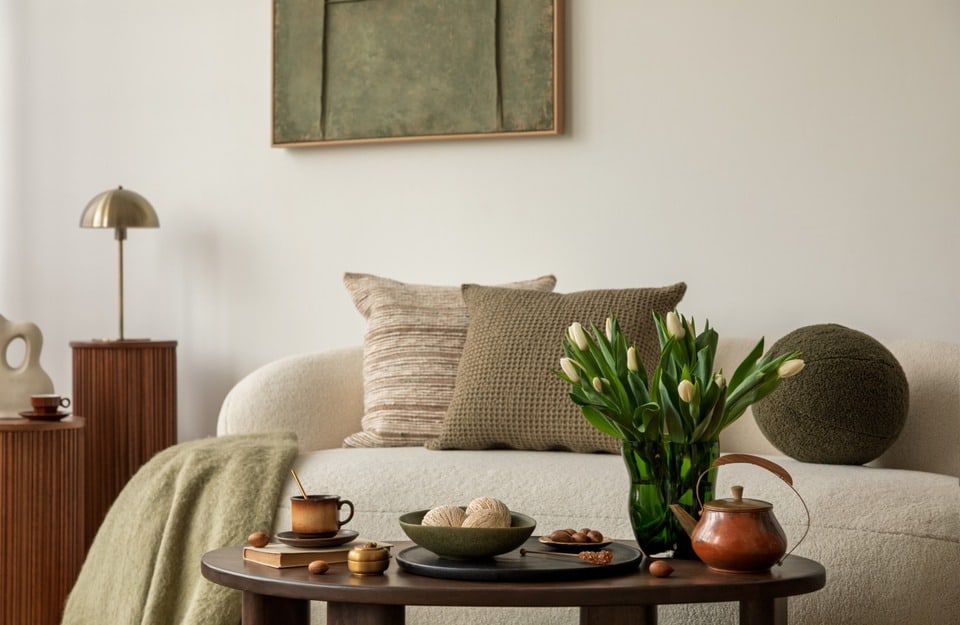
Contrary to what one might think, dark wood contributes significantly to living comfort. As mentioned, it reduces visual fatigue, creates perceptually more stable environments, and promotes concentration and relaxation.
When combined with low-emission water-based coatings, such as those developed by Rio Verde, it can also be used on large surfaces without compromising indoor air quality.
The result is a healthier, more balanced space, more in tune with the rhythms of everyday life.
