
Living slowly: slow living in interior design
In an era marked by frantic rhythms and constant acceleration, the desire to inhabit spaces that restore calm, harmony, and well-being is growing. Slow living—a phenomenon we hear about increasingly often—has established itself as a philosophy of mindful living: a way of experiencing the home that favors simplicity, the quality of materials, a bond with nature, and time understood as a resource to be protected.
In this article, we explore the roots and principles of slow living, highlighting its connections with related styles such as Nordic hygge and Japanese wabi sabi, and we propose concrete solutions for furnishing according to these values, also through the use of sustainable finishes and paints such as those from the Rio Verde line.
What is slow living?
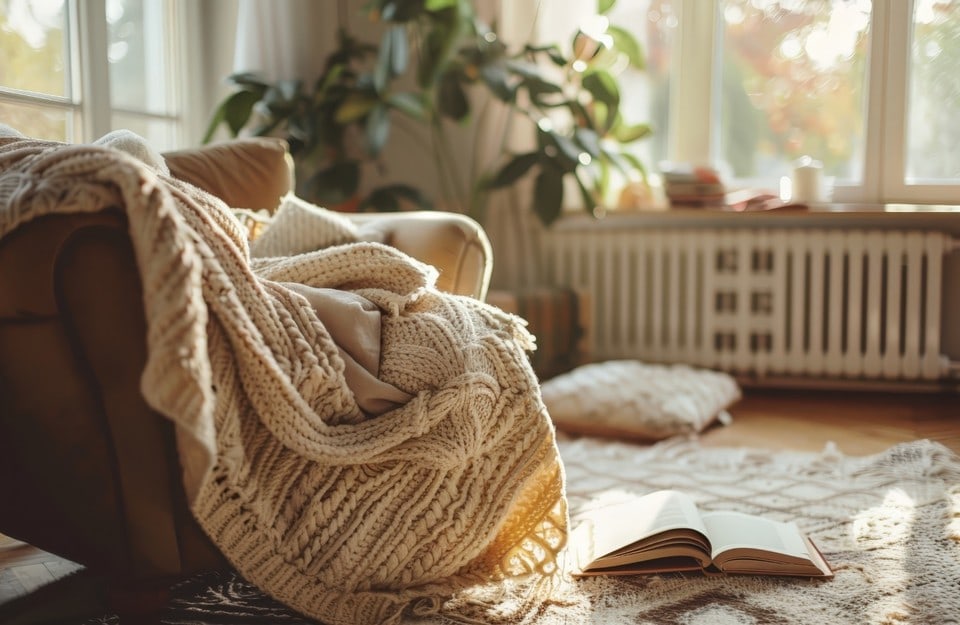
Who, in today’s world, hasn’t felt the need—at least once—to slow down? To reclaim time for the things that truly matter. To take care of oneself while everything around us spins ever faster.
This is where the concept of slow living is born: an approach to life that prioritizes awareness, simplicity, and connection with what surrounds us. In interior design, this “spirit” translates into warm, authentic, quiet spaces designed to welcome and protect.
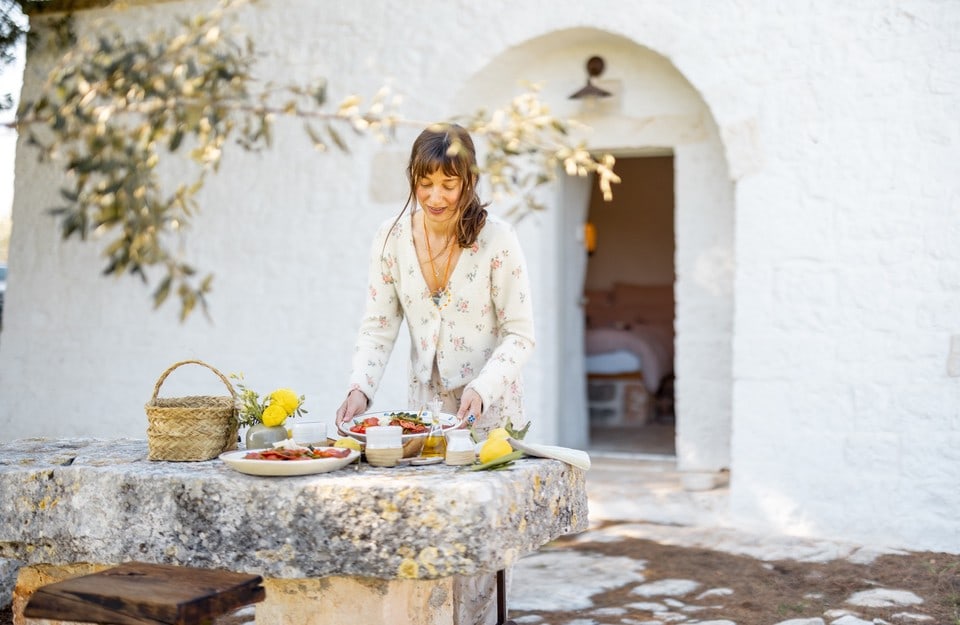
Slow living absorbs influences from different cultures, and among these the Mediterranean style undoubtedly stands out. Homes of Southern Europe—with their slow rhythms, natural materials, airy spaces, and the importance of conviviality—represent a spontaneous form of slow living. White walls that reflect sunlight, artisanal ceramics, limed woods, surfaces that are imperfect yet welcoming: everything speaks of a light life, rooted in the earth and open to the beauty of small things. The Mediterranean style is, after all, slow living ante litteram.

The origins of slow living

The history of slow living is deeply intertwined with our collective reaction to the modern world—made of fast connections, instant decisions, hyper-productive days, and lifestyles that often leave little room to breathe.
The first sign of a break came in the 1980s, when the Slow Food movement was born in Italy: a response to the spread of fast food and the loss of identity in local gastronomic traditions. That symbolic gesture—the pleasure of eating slowly, valuing products of the land—sparked a true philosophy: the culture of slowness.
With the new millennium, this mindset swept into other fields: work (slow work), travel (slow travel), fashion (slow fashion), and finally interior design and domestic life. Slow living is therefore the mature fruit of an increasingly shared need: to slow down in order to live better. And it is a concrete, empathetic, deeply contemporary response to a world that often asks us to run without pause.
It’s no coincidence that slow living surged in popularity during historical moments when we felt a greater need for introspection and protection—during the pandemic, for example. Then we understood that the home is not just a container but content: a place that influences us, welcomes us, and can even heal us.
The principles of slow living
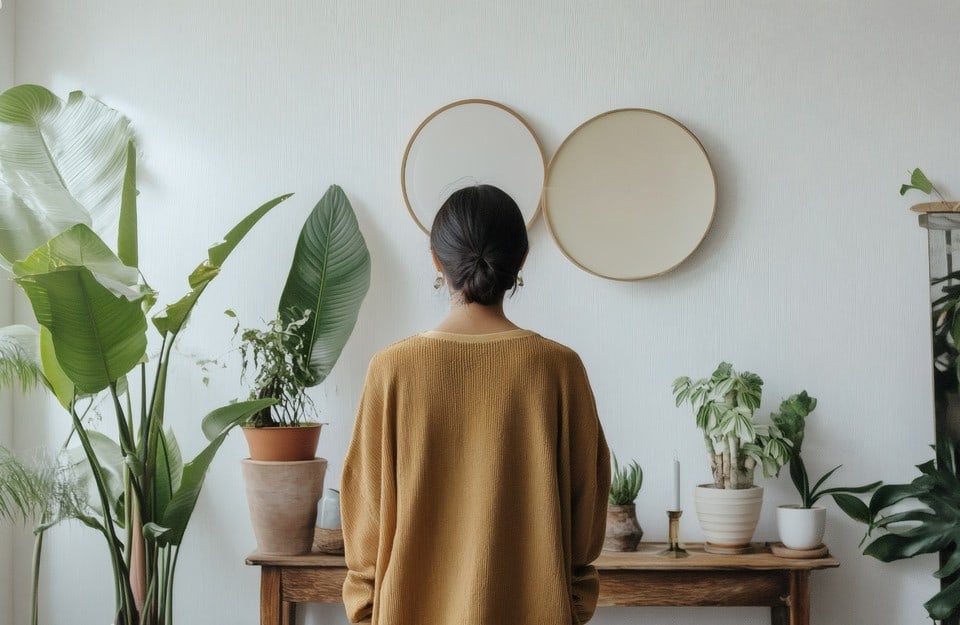
Adopting a slow lifestyle doesn’t simply mean “doing everything more slowly.” Rather, it means doing things intentionally, choosing what truly matters, and cutting away the superfluous. In interior design too, slow living is expressed through a set of guiding principles that shape aesthetic, practical, and value-based choices:
- intentionality: every furnishing element has a reason to exist. It’s not just about filling a space but making it meaningful;
- simplicity: beauty lies in simple things. A wooden table smoothed by time, an imperfect ceramic cup, a bookshelf that grows over time;
- connection with nature: natural materials, colors inspired by the landscape, spaces that promote natural light and air exchange;
- quality over quantity: better a single well-made piece—perhaps restored—than ten low-quality objects. The slow home ages gracefully;
- well-being and comfort: healthy materials, paints free of harmful substances, surfaces that are easy to keep clean, colors that calm the mind;
- slowing down to regenerate: the home as a place of regeneration, precisely. Rooms designed for reading, meditating, cooking without haste.
Affinities with hygge and wabi sabi
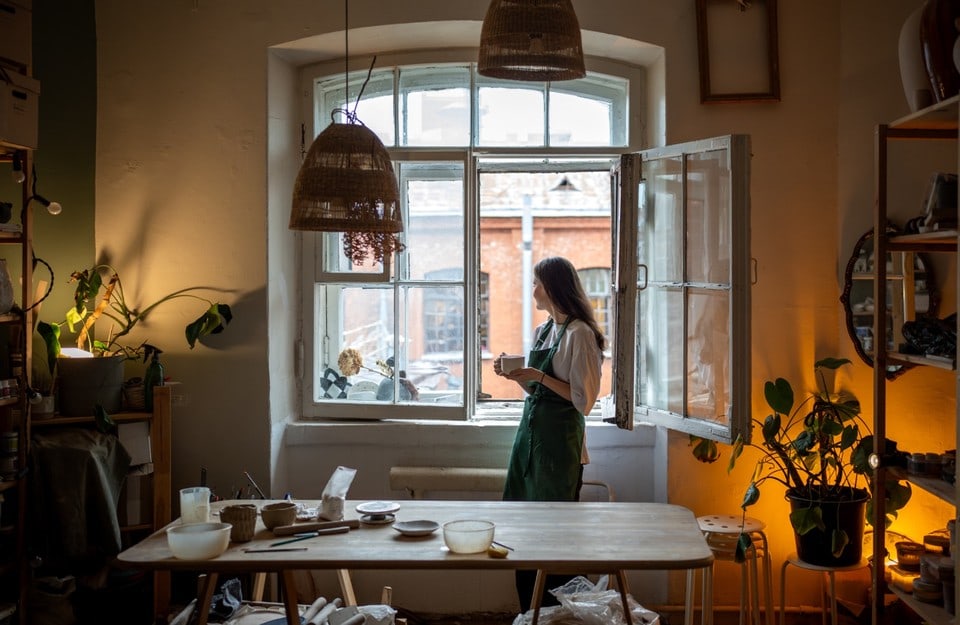
In recent years, slow living has often been compared to philosophies and styles such as hygge and wabi sabi. Although these three approaches share many values, each expresses its own cultural sensitivity and aesthetic.
Hygge is a Danish term that can be (very loosely) translated as “cozy intimacy.” It’s about creating warm, cocooning environments designed for feeling good with oneself or loved ones. A lit candle, a soft blanket, a steaming herbal tea by the fireplace: hygge is the joy of small things, the soul’s comfort zone. In interior design it translates into light colors, essential yet soft furnishings, natural materials, and environments where harmony and warm light prevail.
Wabi sabi, on the other hand, comes from Japan and has a much more philosophical meaning. It is the aesthetic of imperfection, transience, incomplete beauty. Wabi sabi teaches us to accept the marks of time, to see poetry in cracks, to prefer the patina of lived wood to aseptic perfection. In interior design it manifests in imperfect objects, raw materials, irregular surfaces, earthy tones, and quiet atmospheres.
Slow living shares with hygge the pursuit of everyday well-being and with wabi sabi respect for the passage of time. But it stands out for its broader approach, which involves not only aesthetics but also time management, awareness of life rhythms, and the relationship between the individual, the environment, and society. Slow living is a true life choice: furnishing according to its principles means bringing this philosophy into daily gestures as well.
The features of slow interior design
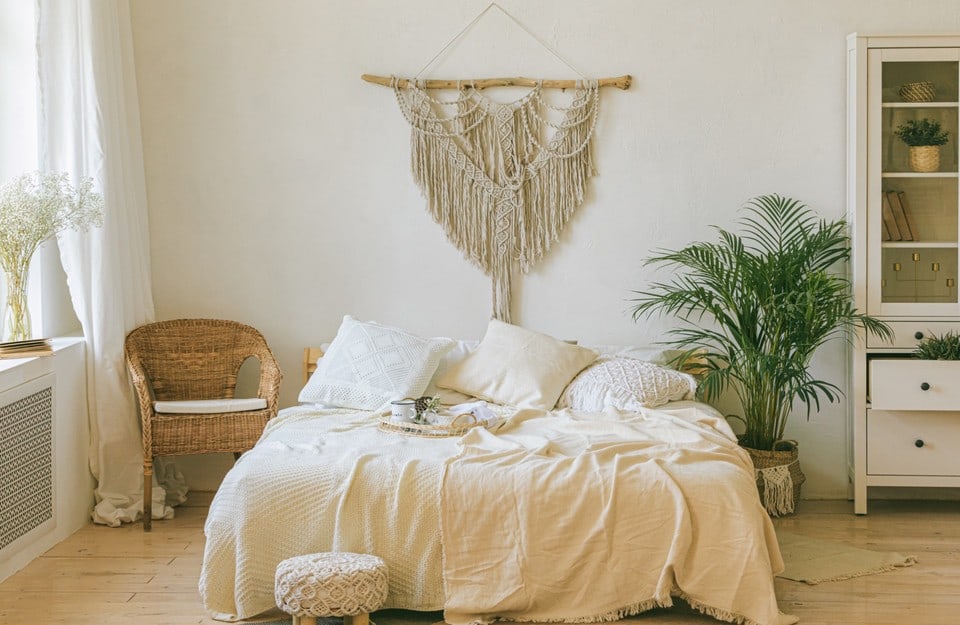
- Relaxing colors: taupe, cream, sage green, warm white, terracotta.
- Textural materials: linen, cotton, hemp, wood left in its natural state.
- Functional, lived-in furnishings: vintage or reinterpreted pieces.
- Natural light: design centered on light.
- Empty spaces: for an ideal visual and mental “breath.”
Some key furnishings of slow living
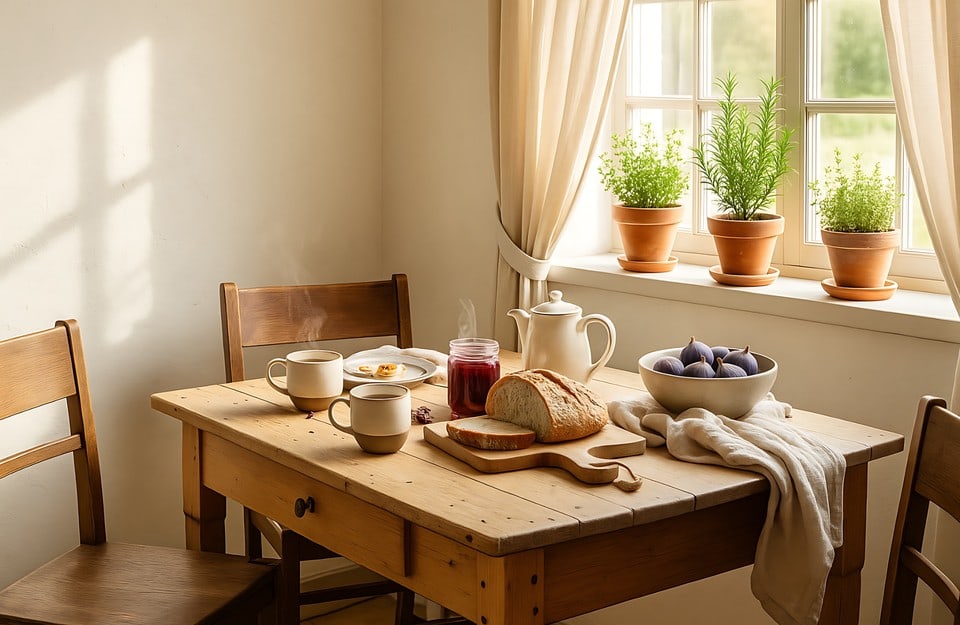
- A solid-wood table with visible knots: the central element of conviviality and shared time. The wood’s knots and imperfections tell a story and invite you to experience every moment of the day without filters.
- An old sideboard restored with a waxy finish: a silent witness to the past, holding tableware and memories. Restored with Rio Verde finishes, it takes on new life without losing authenticity.
- A comfortable armchair upholstered in raw linen: invites pausing and reading. The natural fabric enhances simplicity and comfort.
- A floating shelf in light wood: ideal for displaying meaningful objects, small ceramics, books, or photographs. Light and never intrusive.
- Neutral textiles laid naturally: blankets, curtains, rugs in natural fibers that add warmth and tactility without rigid geometries or excessive decoration.
- Raw-wood bench at the foot of the bed: a functional and decorative surface, ideal for everyday objects or simply to give the room visual breathing space.
- Vintage chest of drawers, restored: with textured finishes such as those of the Vintage Prestige line, it becomes the heart of a slow bedroom or entryway.
- Low, round solid-wood coffee table: encourages a convivial, soft, and fluid layout. Rounded shapes create visual harmony.
- Open bookcase in light or whitewashed wood: a space to tell your story through objects. It displays without hiding.
- Country- or Scandinavian-style sideboard: perfect for those who love to combine functionality, craftsmanship, and visual lightness.
- Low bed with linen or wooden headboard: fosters a sense of grounding and relaxation. Essential yet full of atmosphere.
- Poufs or floor cushions in natural fibers: for informal areas dedicated to meditation, reading, or play. Versatile and welcoming.
- Mirror with a natural or limed wood frame: amplifies light and introduces an element of depth and contemplation.
- Multifunctional handcrafted stool: a small “wild card” that can serve as a seat, side table, or decorative detail.
Rio Verde paints for a slow home
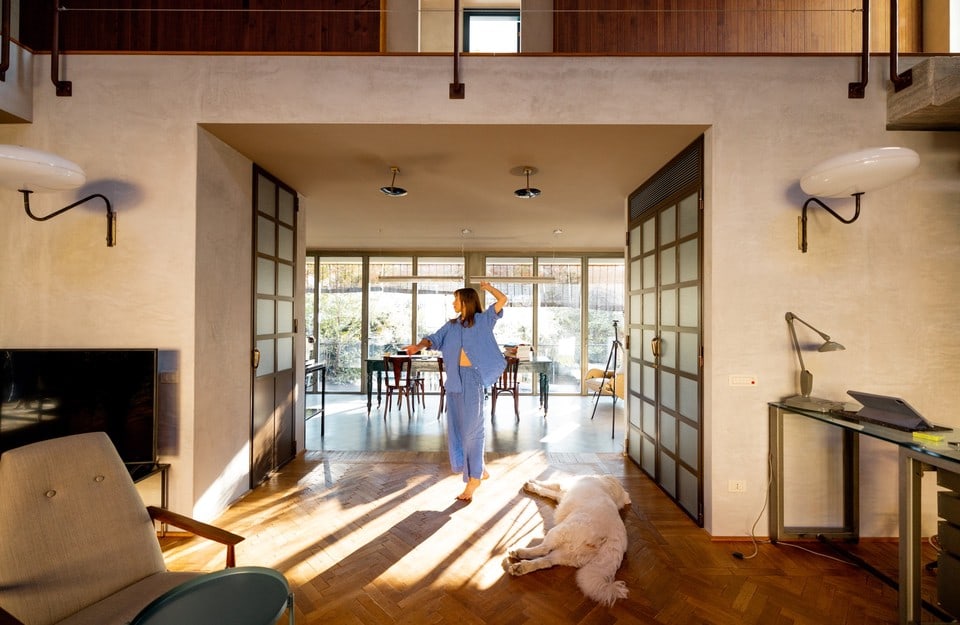
- RC 1X30 water-based wax impregnator: a matte finish that enhances the grain, ideal for furniture that wants to tell its story.
- RO 30xx natural-effect finish: invisible, breathable protection for those who love wood in its purest form.
- Vintage Prestige: perfect for giving furniture new life with pastel colors and lived-in finishes. Highly covering, it can be used without sanding and can be applied to many materials.
- Floor Prestige: neutral shades such as Taupe, Papyrus, or Cement for floors (and more) that express calm and continuity.
- Hybrid Resolve RS 80xx: for natural-looking exteriors, a hybrid, formaldehyde-free paint that does not flake.
To find out which finish best suits your slow home, browse our products and be inspired by a “sustainable chemistry” designed to improve the air quality you breathe every day.
